Choosing the inverter is the decision that determines what your solar system actually does when the grid fails, what happens to the power you do not use, and whether the system can grow later. Panels are largely interchangeable. The inverter is not. This guide compares the three types sold in India on the behaviour that matters: outage performance, surplus handling, battery support, and cost over the life of the system.
What is the difference between on-grid, off-grid and hybrid solar inverters?
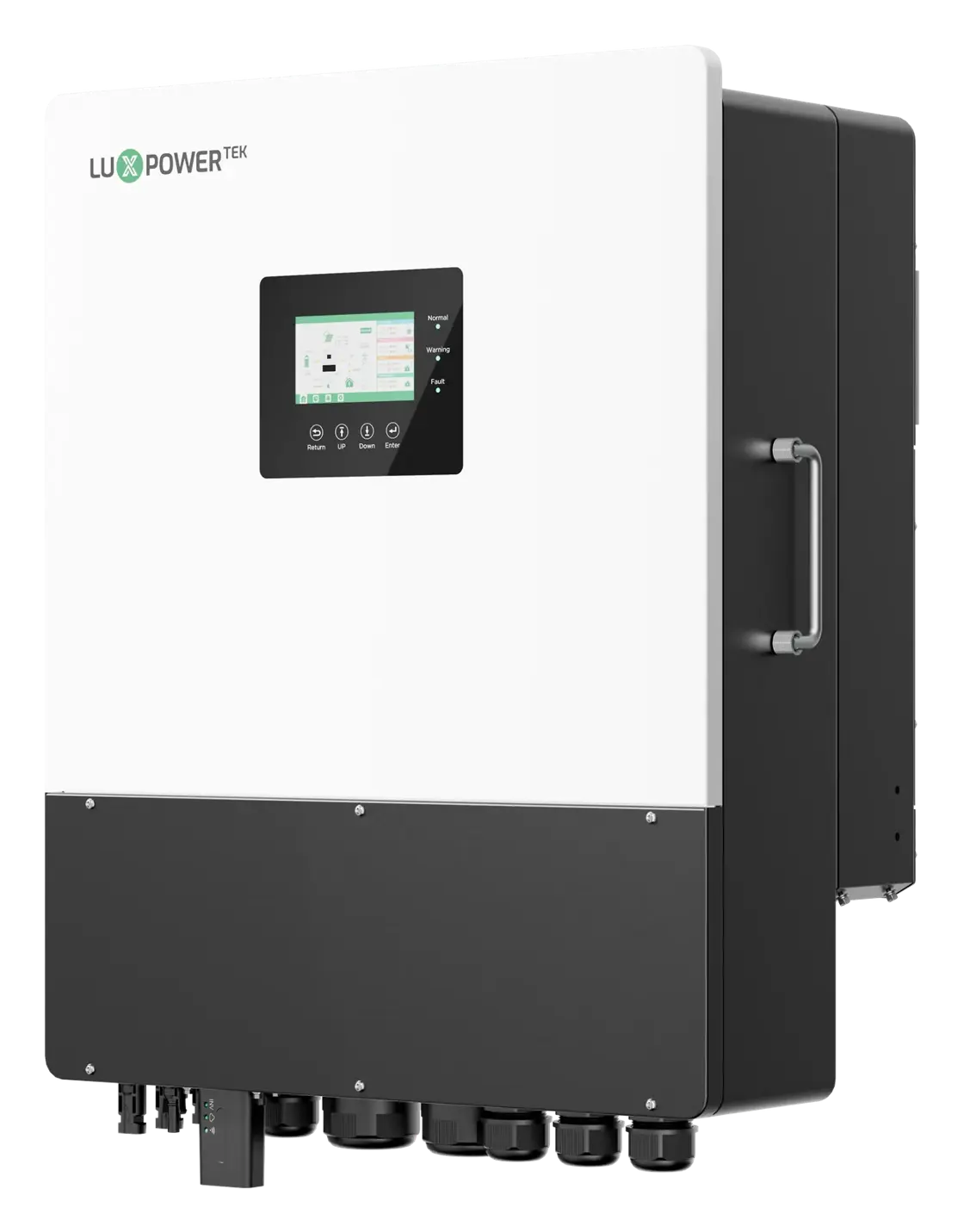
An on-grid inverter sends solar power to your home and exports the surplus to the grid, but shuts down completely during an outage. An off-grid inverter runs from solar and batteries with no grid connection, so surplus beyond a full battery is wasted. A hybrid inverter does both: it uses solar first, charges batteries, exports surplus, and keeps running when the grid fails.
The short answer
For a home in India being fitted with solar in 2026, a hybrid inverter is the right choice in most cases. The exception is a property with a genuinely reliable supply and strong net metering, where an on-grid system is cheaper and sufficient. A pure off-grid inverter makes sense only where there is no usable grid connection at all, which in practice means remote sites, farm installations and some telecom or industrial locations.
The rest of this guide explains why, and what to check before you commit.
Full comparison table
| Behaviour | On-grid | Off-grid | Hybrid |
|---|---|---|---|
| Works during a power cut | No, shuts down | Yes | Yes |
| Needs a battery | No | Yes, mandatory | Optional, supported |
| Exports surplus to the grid | Yes | No | Yes |
| Wastes surplus when batteries are full | Not applicable | Yes | No, exports instead |
| Net metering eligible | Yes | No | Yes, where the utility permits |
| Typical battery bank size needed | None | Large, sized for worst case | Moderate, grid covers the gap |
| Upfront cost | Lowest | Highest for equivalent backup | Middle |
| Can add batteries later | Usually not without replacing the inverter | Already present | Yes, designed for it |
| Best suited to | Reliable supply, strong net metering | No grid connection available | Indian grid conditions, daily outages, future expansion |
Why does an on-grid inverter shut down during a power cut?
This is the single most misunderstood point in Indian solar, and it produces the same complaint every year: a rooftop in full sunshine above a house with no power.
On-grid inverters are required to disconnect the moment the utility supply fails. The function is called anti-islanding, and it is a safety requirement rather than a defect. If the inverter kept feeding power into the local network during an outage, it would energise lines that utility crews have every reason to believe are dead. So the regulation is correct, and the consequence is absolute: no grid, no solar, regardless of how bright the day is.
For a household in a region with daily load shedding, this is the gap between what people expect solar to do and what an on-grid system actually does. The panels are producing. The inverter has switched itself off. The house is dark.
An on-grid system is still the economically efficient choice where supply is genuinely stable and the utility offers worthwhile net metering, because every surplus unit is credited rather than stored. The question to ask honestly is how many hours a year your supply is actually out.
What does an off-grid inverter cost you?
Off-grid systems solve the outage problem completely by ignoring the grid. They are also the most expensive way to solve it, for two reasons that are easy to miss at quotation stage.
The battery bank is sized for the worst case. With no grid to fall back on, the battery has to cover the longest stretch of poor generation you expect to face, not the average evening. That drives capacity, and capacity drives cost.
Surplus generation is simply lost. On a bright day, once the batteries are full and the house has taken what it needs, the extra solar has nowhere to go. The system throttles back. That energy is not stored, not exported, and not paid for. Over a year it adds up to a meaningful fraction of what the array was capable of producing.
Off-grid remains the correct answer where there is no grid connection, or where the connection is so unreliable that treating it as absent is realistic. Outside those cases, it is usually paying more to get less.
How does a hybrid solar inverter work?
A hybrid inverter manages four things at once: the solar array, the battery, the household load, and the grid connection. In normal operation it follows a priority order.
- Solar serves the load first. Generation goes to whatever the house is using at that moment.
- Surplus charges the battery. Once the load is covered, the remainder goes into storage.
- Further surplus exports to the grid. When the battery is full, extra generation is sent out rather than wasted, earning credit where net metering applies.
- The grid fills the gap last. At night or in poor weather, the system draws from the battery first and the grid only when it has to.
- On grid failure, it switches to battery. The changeover is fast enough that lights and fans do not visibly interrupt.
That sequence is why hybrid suits Indian conditions specifically. It does not force a choice between outage protection and surplus value. It also means the battery can be sized for a typical evening rather than a worst case, because the grid is still there as backup to the backup.
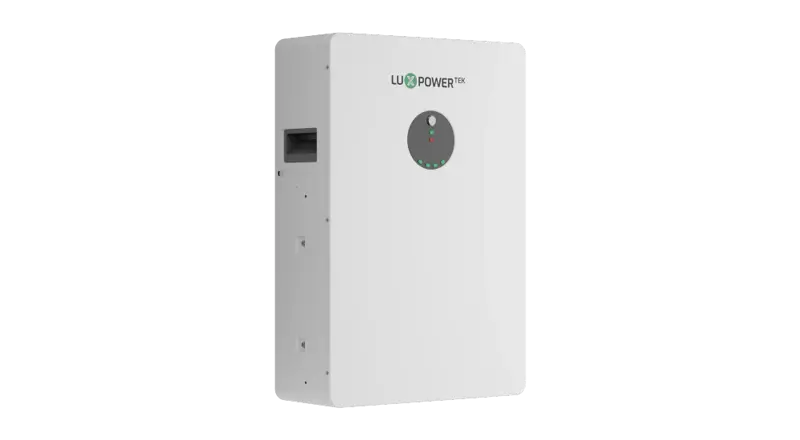
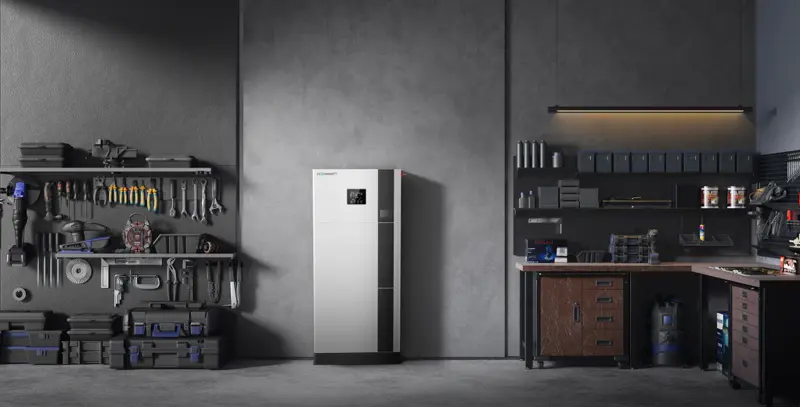
The all-in-one systems take this further by packaging inverter, battery and management system as a single wall-mounted unit, which removes the battery room and most of the installation complexity.
Which type suits your situation
Frequent outages, several hours a week or more. Hybrid. This is the case the technology exists for, and an on-grid system will disappoint you in exactly the hours you most wanted it.
Reliable supply and good net metering. On-grid is defensible and cheaper. Before committing, check whether your inverter choice allows batteries to be added later. Many on-grid units do not, which means a future retrofit becomes a replacement rather than an addition.
No usable grid connection. Off-grid, or hybrid configured for off-grid operation. Size the battery for your worst expected run of poor weather, not your average day.
Planning to buy an electric vehicle. Hybrid, with headroom. An EV substantially changes a household's consumption profile, and charging at home from stored solar only works if the system was specified with that load in mind. This is the most common reason people outgrow a system within three years.
Budget constrained today, expanding later. Hybrid with a smaller initial battery. The inverter is the component that locks in what the system can become. Buying a hybrid inverter and adding storage later costs less overall than buying on-grid now and replacing the inverter when you want backup.
Small commercial or light industrial. Hybrid, and the real decision moves to single-phase versus three-phase, and low voltage versus high voltage battery architecture.
What to check before you buy
Six specifications decide whether an inverter suits the installation. Most quotations state the first and skip the rest.
- Continuous rating against surge rating. The continuous figure tells you what the inverter sustains. The surge figure tells you whether it starts a motor. Pumps, compressors and air conditioners draw several times their running current at startup, and an inverter sized only on continuous load will trip on the first fridge cycle.
- Single-phase or three-phase, and whether that matches your connection. A three-phase property on a single-phase inverter will have backup on one phase only, which is a decision to make deliberately rather than discover afterwards.
- MPPT count and PV input capacity. Separate MPPT trackers let panels on different roof orientations perform independently, which matters on any roof that is not one clean plane. Check the maximum PV input against the array you intend to install, including the array you might add later.
- Battery communication protocol. The inverter and the battery management system should communicate over CAN or RS485, not just share a voltage. Without it, the inverter is guessing at state of charge instead of being told, and you lose most of the protection you paid for. This is covered in more detail in our battery comparison guide.
- Transfer time on grid failure. Fast enough that lights do not flicker is the practical standard. Ask for the figure in milliseconds.
- Ingress protection rating if it will be mounted outdoors. An IP65 or IP66 rated unit can be sited where a standard indoor-rated inverter cannot, which often decides the installation layout.
Frequently asked questions
Can a hybrid inverter work without batteries? Yes. A hybrid inverter runs as a grid-tied system with no battery attached, serving the load from solar and exporting the surplus. It will not provide backup during an outage until storage is added, but the inverter does not need replacing when you add it later.
Will my on-grid solar work during a power cut? No. On-grid inverters are required to disconnect when the grid supply fails, as a safety measure to protect utility workers. The system will not supply the house regardless of how much sunshine is available.
Is a hybrid inverter worth the extra cost over on-grid? In most Indian locations, yes, because it handles outages and preserves the export value of surplus generation. Where supply is genuinely reliable and net metering is strong, on-grid may be the better economic choice. The deciding question is how many hours a year your supply actually fails.
Can I convert my existing on-grid system to hybrid? The panels and mounting usually carry over, but most on-grid inverters cannot be upgraded to support batteries, so the inverter itself is typically replaced. This is why the inverter choice matters more than it first appears.
What size hybrid inverter do I need for a 3 BHK home? Size on peak simultaneous load and surge requirement rather than floor area. A household running lighting, fans, a refrigerator, a television and one air conditioner has a very different requirement from one running three air conditioners. Count the loads you want backed up, add their surge demand, and size from that.
What is the difference between low voltage and high voltage battery systems? Low voltage systems are common in residential installations and simpler to work with. High voltage systems are more efficient at larger capacities and are typical in commercial installations. The inverter must be specified for the architecture you choose, since the two are not interchangeable.
Does a hybrid inverter support net metering? Where the utility permits it, yes. A hybrid inverter exports surplus in the same way an on-grid inverter does. Net metering rules and approval processes vary by state and by distribution company, so confirm the position with your local utility before finalising the design.
Can one inverter handle solar, battery and an EV charger? The inverter manages solar, battery and household load as one system, and an EV charger is one of those loads. What matters is whether the system was sized for it. Specify the EV charging load at design stage rather than adding it to a system chosen without it in mind.
BITEK hybrid inverters by application
- SNA 5000 and SNA PRO-EU 3-6.5K: single-phase ECO Hybrid for residential installations. The PRO series is IP65 rated for outdoor siting.
- GEN3-LB-EU 8K and GEN-PRO-LXP-LB-EU 10-12K: larger single-phase hybrid for high-consumption homes and small commercial loads.
- TriP2-LB-3P 10-20K: three-phase, low voltage battery architecture.
- TriP2-HB-3P 15-30K: three-phase, high voltage, for commercial and industrial installations.
- Eco Beast: all-in-one system with inverter, battery and management packaged together.
Every BITEK hybrid inverter communicates with BITEK batteries over a supported protocol rather than running in voltage-only mode. Our view on why that matters, and how this product line came to be built around weak-grid conditions, is set out in the BITEK story.